
Namibian roots. Ocean ambition.
At home
on the edge
of possibility.
01 / The Arova perspective
The ocean is your business.
Namibia is ours.
A local connection.
A shared horizon.
Bringing a vessel into a new market takes more than a port call. It takes a partner who understands the coast, the people and the work ahead.
Arova Offshore brings international vessel owners and Namibia’s offshore industry together. From local representation to the practical needs of a port call, our focus is the connection between your operation and the country it works in.
Meet your local partner02 / Shore to offshore
One partner. Every connection.Behind every
vessel, a whole
shore operation.
The details on land make the difference at sea. Bring them together with a local partner who sees the whole picture.
Discuss your operationA clear route into Namibian operation.
Local representation, contracting support and charter administration, with the commercial requirements of your vessel and campaign at the centre. Arova is the local contracting entity: tax registration and filings, operating licences, cabotage and work permissions are carried in our name, so the owner never touches a Namibian return.
Every port call is part of the mission.
Agency, husbandry, customs coordination and supply logistics through Walvis Bay and Lüderitz. Berths, yard space, provisioning, bunkers, spares and freight; importation regimes, temporary admission and crew immigration handled before they become delays. The requirements on board connected with the people and resources on shore.
An offshore future with Namibia in it.
Namibian officers, ratings and shore staff employed and managed by Arova, delivering the local content ratio with one signature. Crewing support, local procurement and skills development bring Namibian participation into the planning of each operation.
One conversation. The whole operation.
Bring your vessel, schedule and scope together with the shore-side support they need, from the first enquiry through mobilisation and ongoing operations. Duty teams answer owners and charterers around the clock in every country where Arova operates.
Why in-house matters. Because Arova performs these services itself, we control the quality of what is rendered in our name — and that control is the substance behind our promise to protect the wellbeing of the vessels we manage. One counterparty, one standard.
Namibia’s acreage, its two ports — and the distance between them
Every owner asks the same first question: how far is the work from base? Pick a port and a licence to see the route, the steaming distance and the transit time. It is the single fact that drives PSV numbers, crew-change logistics and the Walvis Bay–Lüderitz decision.
Distances are great-circle estimates between the port and the approximate centre of the licence block; actual routings, weather and rig locations will differ.
Built to serve the operators developing Namibian acreage
Names shown are the licence holders and operators publicly active in Namibian offshore acreage. They indicate the market Arova Offshore is built to serve and do not represent existing contracts, client relationships or endorsements.
What each vessel actually does — watch it work
Offshore support tonnage is not interchangeable. Every class below has a live demo of the job it performs — press a step, or let it run.
Click a step to jump — the demo loops on its own.
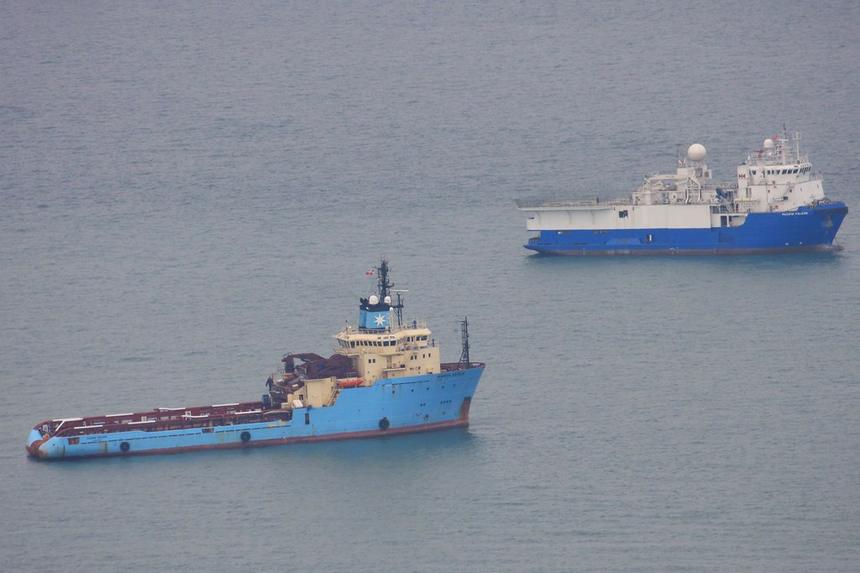
The rig mover
The heavy-lift workhorse of an offshore campaign. An AHTS tows mobile offshore drilling units between locations, runs and recovers the anchors and mooring lines that hold a moored unit in position, and doubles as a supply vessel once the unit is on station. Its defining features are enormous bollard pull, a low open stern with a roller and shark jaws, and a towing winch carrying several kilometres of wire.
When a campaign needs one
- Towing a semi-submersible or moored unit onto and off location
- Running, laying and recovering anchors and pre-set moorings
- FPSO mooring installation and hook-up support
- Standby towing capability during drilling in exposed conditions
Click a step to jump — the demo loops on its own.
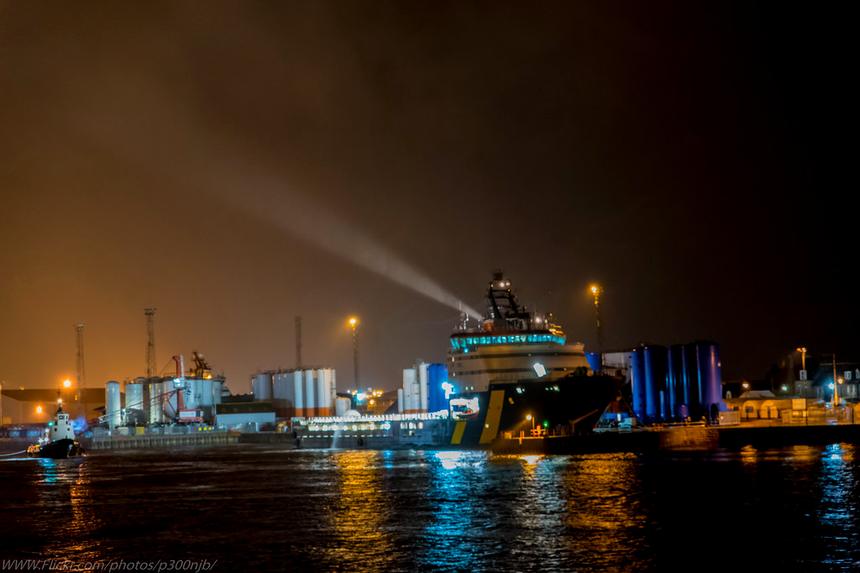
The supply line
The vessel that keeps a rig or production unit working. A PSV carries deck cargo — drill pipe, casing, containers, baskets — on a large flat aft deck, and pumps liquid and dry bulk cargo from below-deck tanks: drilling mud, brine, base oil, cement, potable water and marine fuel. Unlike an AHTS it has no towing role; the whole ship is designed around cargo capacity and precise station-keeping alongside an installation.
When a campaign needs one
- Continuously through every drilling and completion campaign
- Routine resupply of an FPSO or production platform
- Back-loading cuttings, waste and returned equipment to shore
- Cargo runs supporting subsea installation spreads
Click a step to jump — the demo loops on its own.
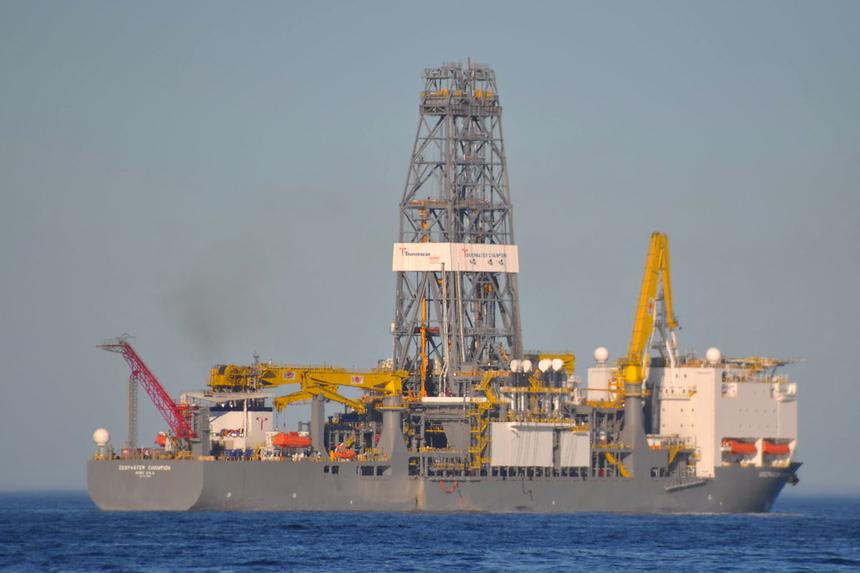
The rigs themselves
We contract and manage drilling units alongside the marine spread that supports them. Three families matter offshore Namibia, and water depth largely decides which one an operator can use.
Drillship
- Ship-shaped, self-propelled, dynamically positioned — no moorings
- Ultra-deepwater capable beyond 3,000 m; high deck load and endurance
- The class used for the deepest Orange Basin wells, including Venus
Semi-submersible
- Column-stabilised on submerged pontoons — excellent in heavy swell
- Moored or DP; needs AHTS support for rig moves and mooring work
- Convertible: BW Energy plans a modified semi-sub as the Kudu production unit
Jack-up
- Bottom-supported on legs; stable and cost-efficient in shallow water
- Practical limit ~120–150 m — too shallow for most Namibian deepwater acreage
Click a step to jump — the demo loops on its own.
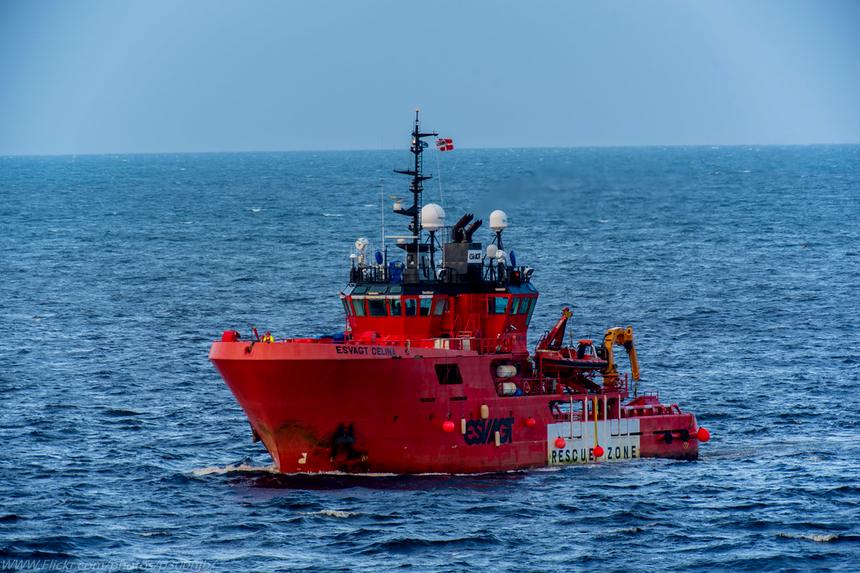
The safety case, floating
A standby vessel does nothing productive on a good day — and that is the point. It holds station near a drilling or production unit ready to recover people from the water, fight a fire or evacuate an installation. Its presence is usually a condition of the operator’s safety case, which makes it a non-negotiable line item rather than a discretionary one.
What it carries
- Fast rescue craft launched in heavy weather
- FiFi monitors with substantial pumping capacity
- Survivor reception: heated space, medical area, casualty handling
- Endurance to hold station for weeks without relief
Click a step to jump — the demo loops on its own.
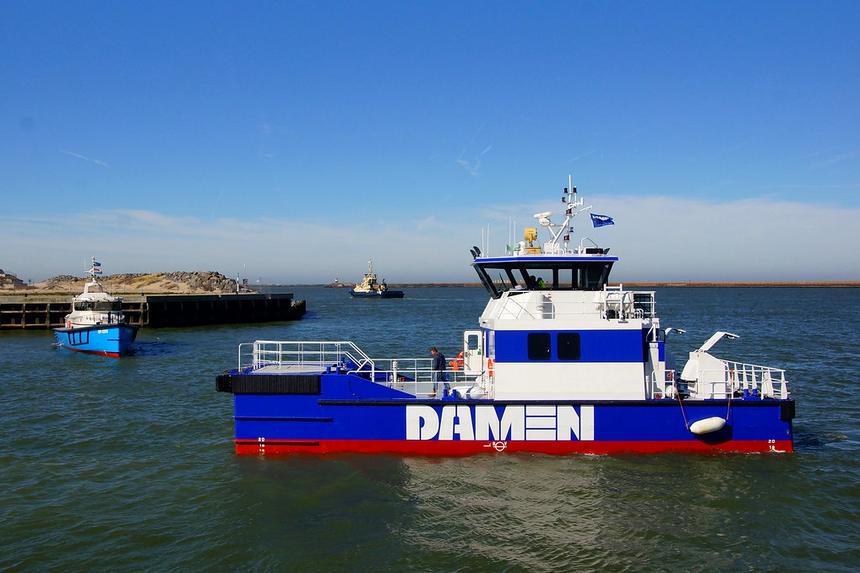
The fast link to shore
Where helicopter capacity is scarce or expensive — and in a new basin it usually is — fast marine transfer carries the crew changes. A CTV moves personnel at speed with motion-controlled seating and a safe boarding arrangement; a fast supply vessel adds a light cargo deck for urgent spares that cannot wait for the next PSV run.
Where it earns its keep
- Routine crew changes on a fixed rotation
- Specialists and inspectors out and back the same day
- Urgent spares that would otherwise stop the drill floor
- Reducing helicopter hours, cost and exposure
Click a step to jump — the demo loops on its own.
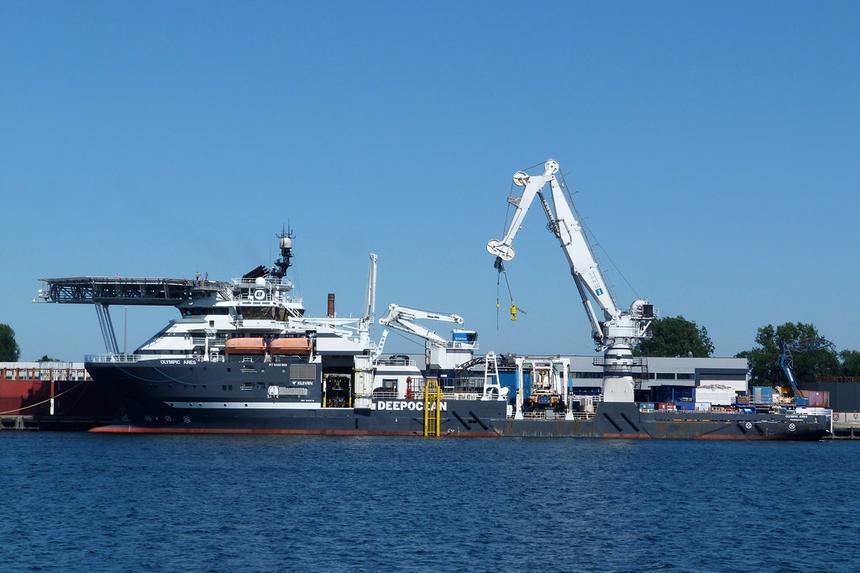
The subsea toolbox
Once a field moves from drilling into installation and production, the work shifts below the waterline. An MPSV carries work-class ROVs, a heave-compensated crane and a deck laid out for subsea hardware — installing and inspecting the manifolds, jumpers and control systems that tie a subsea development back to its floating production unit.
Typical scopes
- ROV survey and intervention on subsea infrastructure
- Installation of light subsea structures and flexibles
- Inspection, repair and maintenance through field life
- Pre-commissioning support and subsea testing
Click a step to jump — the demo loops on its own.
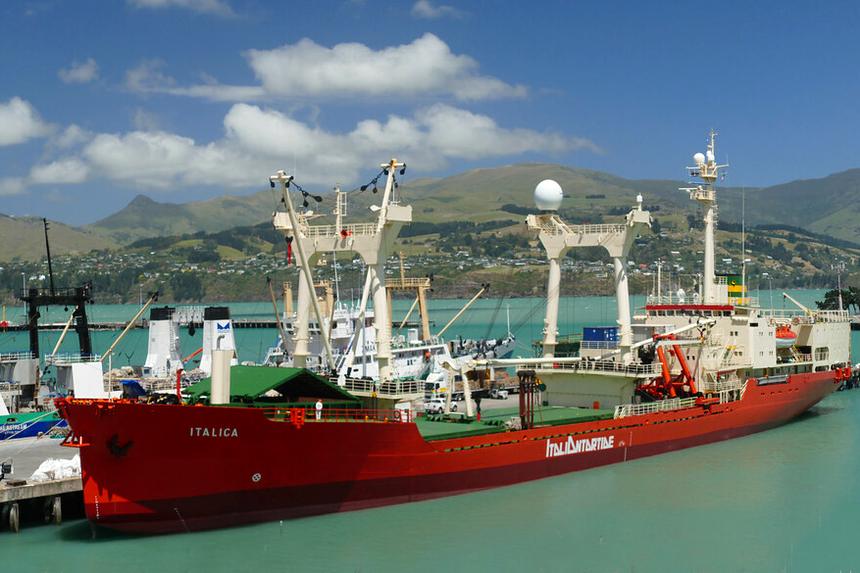
The work before the work
Nothing gets installed on the seabed until it has been mapped and the soil has been tested. Survey vessels run the geophysical and geotechnical campaigns that de-risk a development: multibeam bathymetry over well locations and routes, sub-bottom profiling for shallow hazards, and cone penetration tests and boreholes to prove the ground will hold anchors, foundations and manifolds.
Typical scopes
- Well-site and rig-site surveys before the drilling unit arrives
- Flowline, umbilical and export route surveys
- Geotechnical boreholes and CPT for foundations and moorings
- Environmental baseline and metocean data collection
The fields being developed off Namibia — and who owns them
Namibia went from frontier acreage to one of the world’s most closely watched deepwater plays in four years. Select a licence to see the discovery, the development concept and the equity split. NAMCOR, the national oil company, carries a stake in every one.
From first discovery to first oil
How Namibia’s offshore story has unfolded, and what the operators are targeting next. Filter by the kind of milestone.
Who owns Arova Offshore
Local content only means something if the ownership stands up to scrutiny. Ours is structured so that Namibian equity, Namibian control and Namibian benefit are verifiable rather than asserted.
Arova Offshore Holdings (Pty) Ltd
Namibian-registered holding company · Registered office: Walvis Bay, Republic of Namibia
Arova Marine Operations
Charters, manages and operates the PSV, AHTS and support tonnage. Holds the charter parties and vessel management contracts.
Arova Rig & Drilling Services
Rig contracting and offshore drilling services — MODU sourcing, agency, marine warranty liaison and rig-move coordination.
Arova Agency, Crewing & Husbandry
The in-country backbone: port agency, husbandry, customs, fiscal representation, and Namibian crewing with cadetship pathways.
Content that stands up to an operator’s compliance team.
Namibia’s Cabinet approved the upstream petroleum local content policy on 4 August 2026. Its focus areas — employment, local procurement, enterprise development, technology and skills transfer, and increased Namibian ownership — are precisely the axes on which marine contracts will now be judged. For a foreign owner, Arova is the local content position.
Majority Namibian equity with Namibian executive representation, held at the level of the entity that signs the charter party.
Namibian officers, ratings and shore staff are Arova employees — the crewing ratio arrives with the contract, not after it.
Provisioning, bunkering, agency, catering, waste and repair spend routed to Namibian suppliers wherever capability exists — and developed where it does not.
Cadetships and structured seat-time on each managed OSV, so deepwater competence transfers to Namibian seafarers with every contract.
Local content spend, crewing ratios and enterprise development data reported in the format operators and NAMCOR need for their licence obligations.
The questions every owner asks before sending a vessel to Namibia
Plain answers to the practical questions. General orientation only — Arova confirms the current position for your vessel and contract.
This hub is general guidance, not legal or tax advice. Requirements are set by Namibian authorities and change; Arova’s in-house team confirms them at contract and keeps them current through the charter.
Place a vessel, contract a rig, or ask us how the model works
Tell us the vessel, the dates and the licence area — our team responds with a deployment plan covering the commercial, fiscal and local content route into Namibian operation.
Chartering & deployment
24/7 duty desk
+264 64 000 0000 — answered around the clock
Offices
Port of Walvis Bay · Lüderitz · Windhoek liaison